DNA Knows No Borders
To observe a garden is to observe an ecosystem sustained by the balance of diversity. In nature, nothing remains static: species spread, compete, adapt, and coexist according to dynamics that precede any form of human control. When the gardener intervenes to rigidly separate species, removing what is considered foreign or unnecessary, an artificial order is imposed upon a natural process that instead tends spontaneously toward mixture, transformation, and renewal.
Plants migrate as well. They have always sought more favorable environments, greater access to light, water, and the conditions necessary for survival. Plant migration is not an anomaly of nature, but one of the primary engines of biological evolution. Through movement and the encounter between different populations, genetic heritage is renewed, ecosystems gain resilience, and biodiversity is strengthened.
The same principle runs through the history of humanity. Genetic and anthropological evidence demonstrates that all modern human beings share a common origin in the populations of sub-Saharan Africa, from which the great migrations toward the Middle East, Asia, Europe, and the rest of the world began. Contemporary migratory routes are therefore not exceptional or unnatural phenomena, but the continuation of a movement as ancient as the human species itself. Human beings are, by nature, nomadic creatures shaped by travel, encounter, and adaptation.
Modern genetics began with the discoveries of Gregor Mendel, who introduced the concept of the gene as a hereditary unit capable of transmitting biological characteristics from one generation to another. Later, the discovery of the DNA structure by James Watson and Francis Crick in 1953 revolutionized humanity’s understanding of the biological origins of life. Today, we know that every vital process occurs within cells and that DNA contains the fundamental instructions necessary for the development of every living organism.
Every human being begins existence as a single cell: the zygote. Within that microscopic structure lies the entire genetic blueprint necessary for the formation of a complete individual. The heart, the brain, the lungs, the nervous system, and even the capacities to think, remember, create, and love derive from the information encoded within that original cell.
From a single cell emerge billions of highly specialized cells cooperating in extraordinary harmony. The human brain, with its billions of neurons and synaptic connections, is one of the most complex structures known in nature; yet it too arises from the same biological origin shared by every individual. Contemporary genetics further demonstrates that human DNA is more than 99.9 percent identical among all people. Ideas of racial superiority or ethnic purity therefore possess no scientific foundation. On the contrary, biology teaches that genetic diversity strengthens populations, while isolation and excessive closure produce fragility.
Despite this, modernity has built much of its identity upon an obsession with separation. Geographical borders, ethnic categories, cultural identities, and national affiliations are transformed into rigid structures through which societies define who belongs and who must remain excluded. From childhood onward, human beings are taught to recognize divisions before understanding the profound connections that unite humanity. In this way, the border ceases to be merely a political instrument and becomes a psychological and cultural construct.
The Qur’an also addresses the unity of humanity and the meaning of diversity. In Surah An-Nisa (4:1), it states:
“O mankind, fear your Lord, who created you from a single soul, and from it created its mate, and from the two spread many men and women.”
Humanity is therefore described as a single reality derived from one common origin.
Linguistic and ethnic diversity is not portrayed as a fracture, but as a manifestation of creation itself. In Surah Ar-Rum (30:22), the Qur’an declares:
“And among His signs is the creation of the heavens and the earth and the diversity of your languages and your colors.”
The plurality of cultures and identities is thus not presented as an error to be corrected, but as a natural dimension of human existence.
In Surah Al-Hujurat (49:13), the Qur’an further expands this principle:
“O mankind, indeed We created you from a male and a female and made you peoples and tribes so that you may know one another.”
The meaning of difference is therefore not separation, but mutual recognition. The other is not presented as a threat to identity, but as an opportunity for understanding and relationship.
The Qur’an also describes human creation through profoundly symbolic and biological imagery. In Surah Al-Mu’minun (23:12–14), the process of human formation is narrated; in Surah Al-Insan (76:2), humanity is described as being created from a drop of living fluid; while Surah Ar-Rahman (55:14) recalls humanity’s origin from earth and clay. In Surah At-Tin (95:4), it is written:
“Indeed, We created man in the finest form.”
And in Surah Al-Baqarah (2:30):
“I will place upon the earth a successor.”
These verses attribute to human beings not only a biological nature, but also a moral, spiritual, and ethical responsibility toward life and the world.
Travel itself assumes a deeply spiritual and anthropological meaning. In Surah Fatir (35:39), the Qur’an states:
“It is He who has made you successors upon the earth.”
And in Surah Al-Ankabut (29:20):
“Travel through the earth and observe…”
Human beings therefore appear as temporary travelers, inhabitants passing through the world rather than permanent possessors of it.
Finally, in Surah Al-Ma’idah (5:48), the Qur’an states:
“Had God willed, He could have made you one community, but He intended to test you through what He has given you.”
Difference is therefore not abolished, but recognized as an essential condition of human existence. The true challenge is not to eliminate diversity, but to build a form of coexistence capable of embracing it.
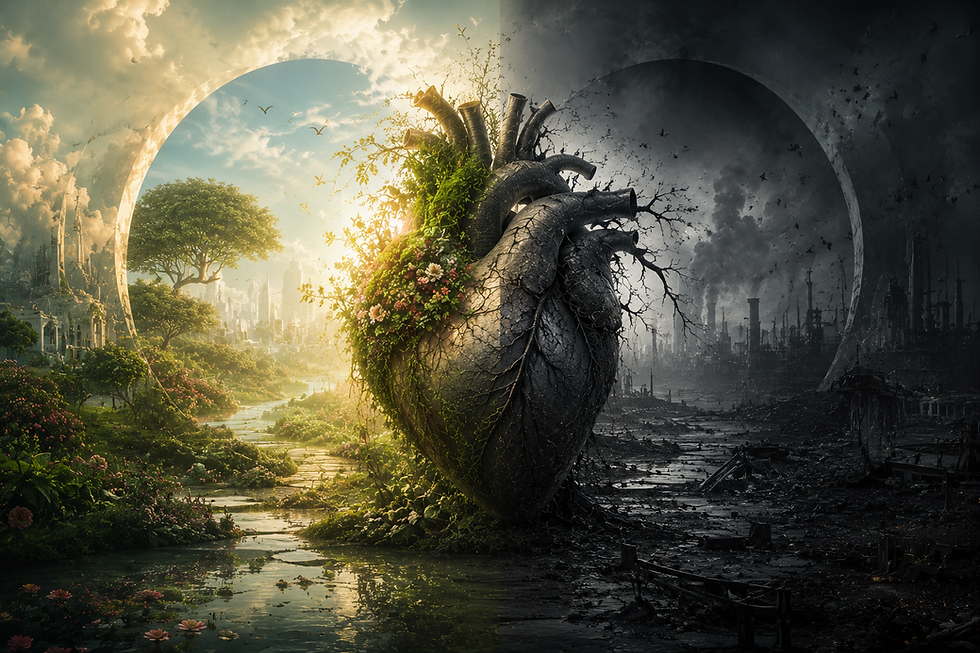
Contemporary society increasingly resembles a garden incapable of understanding the value of human biodiversity. Yet an ecosystem that rejects renewal and refuses contact with new species is destined for impoverishment and eventual extinction. The same occurs with civilizations that transform borders into absolutes: in attempting to preserve a supposed purity, they ultimately lose their capacity to evolve.
Perhaps the great challenge of the future will be learning to conceive biodiversity not merely as an ecological principle, but as an ethical, cultural, and political one. To look at humanity as one observes a garden is to understand that no species, no people, and no individual truly exists in isolation. Life regenerates itself only through relationship, exchange, and encounter.
The border, then, may not be a natural reality at all, but the greatest illusion humanity has ever created.



Comments